काठमाडौं ।
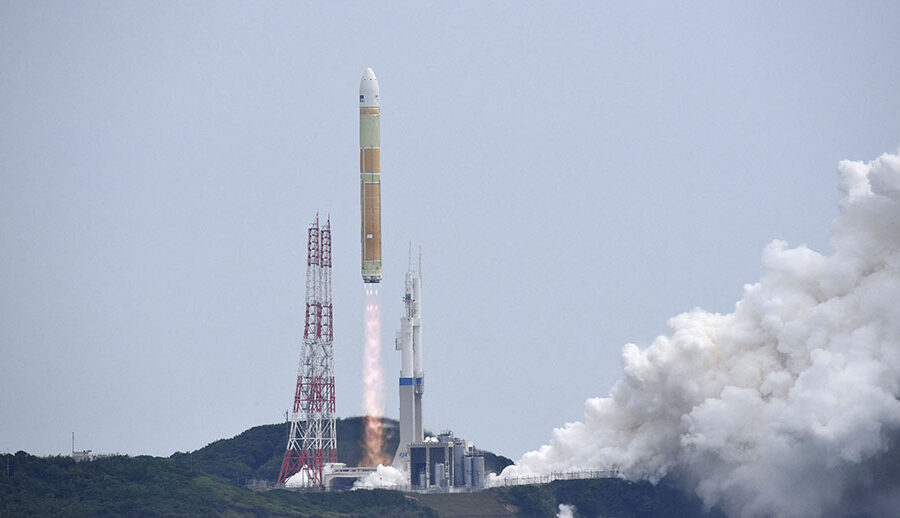
Japan’s flagship H3 rocket successfully blasted off Friday, live footage showed, months after its previous mission to put a geolocation satellite into orbit ended in failure.
The H3 was developed to boost the international competitiveness of Japan’s rocket industry, and the country’s space agency has come under pressure to increase the success rate of launches.
The rocket has been mooted as a rival to SpaceX’s Falcon 9, and could one day deliver cargo to bases on the Moon.
On Friday, the rocket — which was carrying six small satellites — lifted off at 9:53 am (0053 GMT) from Tanegashima Space Center in southern Japan.
“The second-stage combustion, action control and trajectory are all normal,” the Japan Aerospace Exploration Agency (JAXA) said in a live YouTube broadcast, about six minutes after blast-off.
The satellites loaded onto the rocket included Tokyo University of Science’s “Umitsubame”, which observes the Earth and other targets with a high-performance camera, and Shizuoka University’s “Shiraito”, which is testing space debris capture technology, according to JAXA.
Designed for “high flexibility, high reliability, and high cost performance”, JAXA had toasted five successful launches of the H3 before Friday, but there have been two failures, including the last one in December.
H3 project manager Makoto Arita said prior to lift-off that the latest attempt was “crucial for our comeback” following December’s failed mission, in which a second-stage engine terminated prematurely.
The space agency is targeting up to eight H3 rocket launches a year, according to a JAXA official who spoke on the live broadcast. AFP
प्रकाशित: ३० जेष्ठ २०८३, शनिबार